What Geneva Lake's New Management Plan Tells a Buyer About the Water
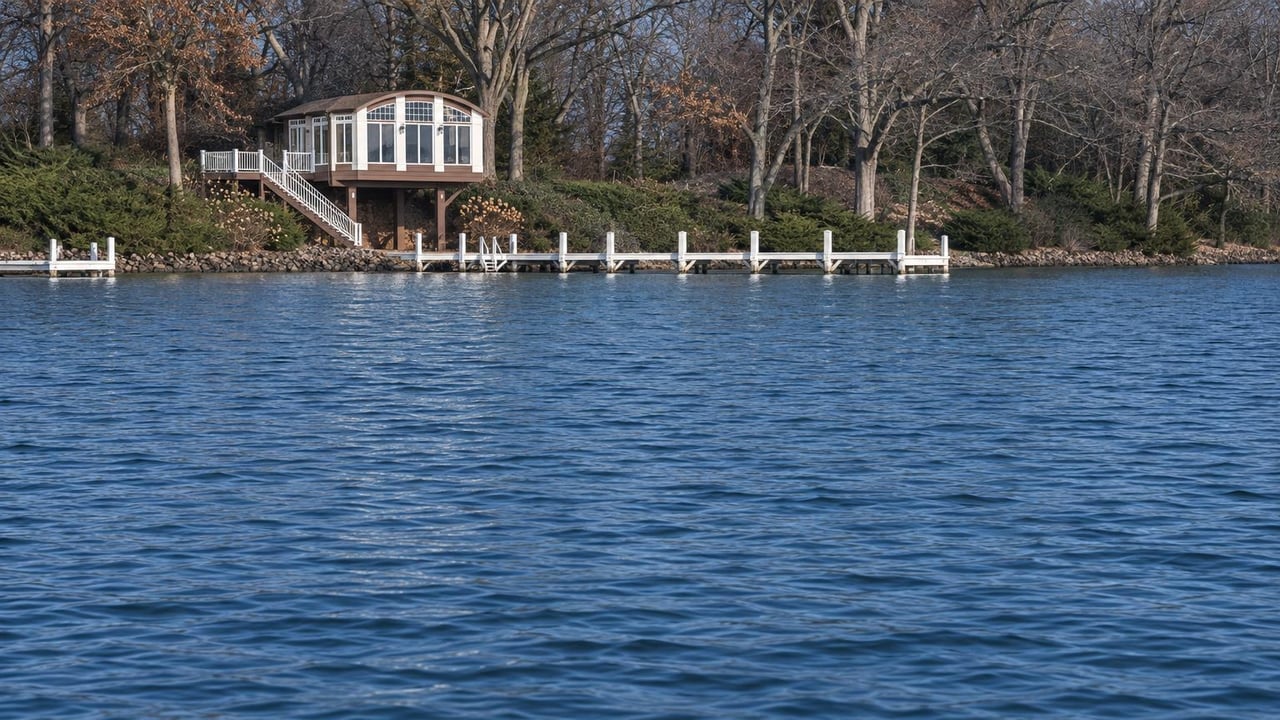
On a Tuesday morning in August 2023, a drone survey of Geneva Lake counted 29 active boats on the water. On a Saturday that same month, during Venetian Fest, the same survey counted 251. Both figures describe the same lake in the same summer, and both appear in the Southeastern Wisconsin Regional Planning Commission's third lake management plan for Geneva Lake. The plan was published in April 2026, and the Geneva Lake Association's August 1, 2026 summary notes that the Wisconsin DNR approved it.
When buyers compare lakes, they usually ask for one number: how clear the water is, how busy the lake gets, how built-up the shore is. The new plan gives a fuller answer than any one figure can. Geneva Lake varies by hour, by month and by stretch of shoreline. That makes the days you will actually spend on the water the most useful thing to know about the lake you are buying.
The headline number in the plan is water clarity. Researchers measure it with a Secchi disk, a black-and-white plate lowered until it disappears. Average Secchi depth on Geneva Lake was 12.7 feet in 1988 and 36.9 feet in 2024. In June 2025 the disk stayed visible to 45.9 feet in the eastern basin and 45.6 feet in the western basin. The biggest gains came in spring and early summer. Between the late 1980s and 2025, April clarity rose by 24 feet and June clarity by 28 feet.
The calendar still matters. Across all samples, winter readings averaged more than 19 feet, and August averaged 11.7 feet. So the water a buyer looks into from a pier in June can be very different from the water in front of the same pier during the busiest weeks of summer.
The plan also says plainly that it doesn't know for certain why the water has cleared. Zebra mussels have been verified in the lake since 1995. In 2024, Geneva Lake became the first inland lake in Wisconsin with a verified population of quagga mussels, and mature specimens suggested they had been there two to three years or longer. Both species filter water as they feed. The plan points out that the sharpest jump in clarity came within the past five years, which overlaps with the quagga discovery, but it says a causal link cannot be established yet.
If clarity were the whole measure of a lake's health, Geneva Lake would have nothing left to work on. The plan's other water figures show why that isn't so.
Researchers analyzed 2,043 phosphorus samples taken from 1960 to 2025. Surface samples showed no significant trend. Samples from deeper than 30 feet showed a weak but statistically significant increase, and samples from below 100 feet first passed 0.15 mg/L in summer 2024. Chlorophyll-a, a measure of algae, is slightly lower than in 1988 but has been edging up since 2010. Its record highs, 14.9 µg/L on July 22, 2020 and 11.7 µg/L on April 28, 2022, both exceeded the state's 8 µg/L benchmark for lakes of this type. Chloride, which the plan attributes largely to road salt and water softeners, measured 55.7 and 57.1 mg/L in April 2025. In May 1960 it was 5.7 mg/L.
The plan's own reading is that clearer water and less visible algae do not necessarily mean better water quality, because filter-feeding mussels may be partly masking elevated phosphorus. The groups that look after the lake treat that as their next task. In its Fall 2026 newsletter, the Geneva Lake Environmental Agency calls phosphorus reduction the plan's number-one water-quality priority. It reports that GLEA, the Geneva Lake Association and the Geneva Lake Conservancy are working with Walworth County on nine priority projects. Some will move forward this fall, and others will develop over the next several years. GLEA also widened its quagga mussel surveys this summer to sites about 30 to 70 feet deep.
For an owner thinking in decades, the plan names the issues and the organizations working on them, which is more useful than a single clarity reading.
GLEA's 2025 Annual Boat Count, taken on August 13, 2025, found 5,094 watercraft docked, moored or available for in-and-out service. That is 14% fewer than the 5,899 counted in 2024. The mix shifted too. The release reports personal watercraft down about 16% and kayaks, paddleboards and rowboats up about 14%. In the 2025 count, nonmotorized vessels were 21% of the total and motorized boats, 3,148 of them, were 62%.
The longer record runs the other way. Between 2003 and 2024, moored, docked and in-and-out boats averaged 5,196, from a low of 4,464 in 2017 to a high of 6,034 in 2022. Over that period the count rose by about 36 boats a year, a statistically significant increase. One year's drop in a series that has been climbing for two decades doesn't tell a buyer the lake is getting quieter. Docked boats also show what owners store, which is a different thing from how many boats are out at once.
That is why the drone counts are the most useful part of the plan for someone choosing a stretch of shore. In 2023 and 2024, the Geneva Lake Conservancy, working with Commission staff and a drone operator, counted boats on the water on 17 dates between June and August. The dates ranged from weekday mornings to holiday afternoons. The busiest days were 251 active boats during Venetian Fest on August 19, 2023 and 222 on July 4, 2024. The kind of boating changed with the day as well. Fishing boats and sailboats made up a larger share on ordinary weekdays, and powerboats made up a much larger share on weekends and holidays.
The plan uses a conservative boating-density model to set a comfortable maximum of 265 boats on the water at one time, based on about 4,500 usable acres. None of the drone survey dates went over that figure. An aerial image from 2023, however, showed 308 active boats. The plan's figure of that image marks two areas of dense traffic, Williams Bay and The Narrows. It also shows where moored boats cluster: off the beach near Big Foot Beach State Park and along the lakefronts of the City of Lake Geneva, the Village of Fontana-on-Geneva Lake and the Town of Linn. About 51% of respondents to the 2023 lake-user survey said they either often change their boating plans or don't boat on weekends because of traffic.
This is where the plan matters most for a Chicago-area buyer. A second home used Friday evening through Sunday is used at exactly the hours when powerboats dominate and the busy bays are fullest. A weekday or year-round owner has the lake of the 29-boat Tuesday much more often. Geneva Lake's 112,854 feet of shoreline is divided among the Town of Linn at 48%, Fontana at 19%, Williams Bay at 17% and the City of Lake Geneva at 16%. Where a property sits within that split, and whether it faces open water or a busy bay, shapes a summer Saturday more than any lake-wide count. Our earlier guides to Geneva Lake's shoreline neighborhoods and boat access options cover those differences shore by shore.
The shoreline is filling in as well. Aerial imagery from July 2023 counted 855 piers, about one every 130 feet. GLEA's 2024 count found 991, or 47 per mile, 27% more than in 2004. The two methods don't line up exactly, but both describe a shore where a pier, a lift and moored boats are the normal view from almost any lawn.
The Geneva Lake Shore Path runs nearly 26 miles in front of those lawns. About 92% of respondents to the 2023 lake-user survey said they had used it, and the lakefront owners whose property it crosses maintain it, with support that includes funding from the Geneva Lake Association. For a lakefront buyer, the path is part of the property's daily life. How busy it is in front of a given house follows the same weekend rhythm as the boats. Our Shore Path guide goes through it segment by segment.
The plan's high-priority shoreline recommendations ask owners to work native plants into their shoreline protection, through the Geneva Lake Conservancy's Conservation@Home and Keep It Blue programs. As of 2025, the Conservancy had visited more than 300 properties through its conservation programs, and 160 owners had signed the Keep It Blue pledge.
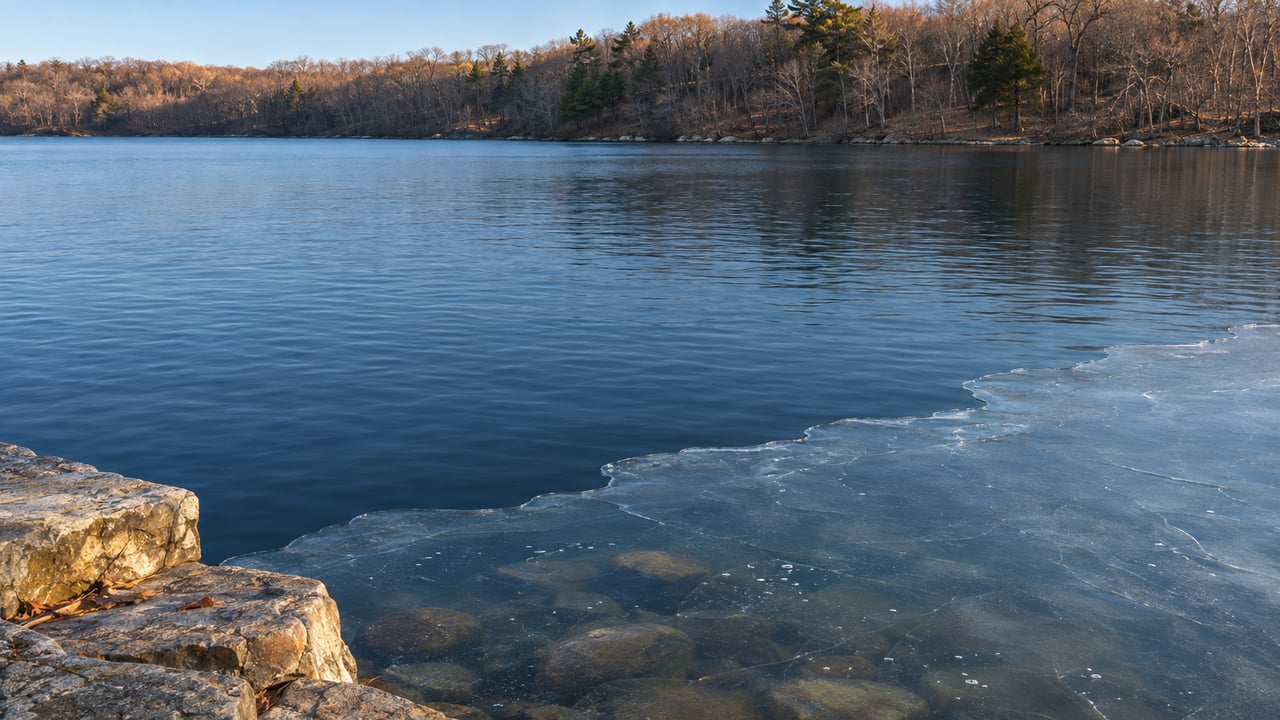
Buyers touring this week see the lake at a quiet time of year, and the plan helps fill in what they can't see. Winter is when the water is clearest after the June peak, with average readings above 19 feet. Open water also stays longer than it used to. In the plan's records, average ice-on moved from about December 21 in 1862–1872 to about January 20 in 2008–2018. The lake froze completely every winter from 1862 through 1996 but hasn't done so in 1997 and several winters since. Our recent post on the freeze explains how that date gets called.
Late fall is when the piers are out and the busy bays are empty. A showing at this time of year shows you the house, the frontage and the water at its calmest. The drone counts fill in the August Saturday. Venetian Fest has been the busiest day in the drone surveys, and our read of that week downtown shows how it moves around the shoreline.
Bob Webster brings more than 40 years of Geneva Lakes market knowledge to how each stretch of shore lives, from a quiet Tuesday in November to the Saturday of Venetian Fest. If you are weighing a waterfront property and want to know what its shoreline is like at the times you will be there, or you own one and want it valued with that local context, Bob Webster can help, quietly and on your schedule. Request a confidential market valuation.
Stay up to date on the latest real estate trends.
November 26, 2026
November 19, 2026
Bob Webster | November 13, 2026
November 12, 2026
November 5, 2026
October 29, 2026
October 22, 2026
October 15, 2026
Bob Webster | October 14, 2026
Bob is dedicated to offering the finest real estate service available in the Lake Geneva area. He attempts to make each buyer or seller he works with feel like they are the one and only client he has and strives to make each transaction a pleasurable experience with the least amount of problems, stress, and inconvenience to them.
101 Geneva National Ave. S. Lake Geneva, Wisconsin 53147